
Capabilities
Precision Grinding
5-axis and 3-axis precision grinding services for turbine blades and critical features.


Technology
5-axis grinding with continuous dressing
High-precision 5-axis grinding is one of La Rapida’s core technologies, dedicated primarily to rotating turbine blades and components with complex geometries. Our grinding centers from MÄGERLE and Makino combine simultaneous multi-axis control with creep-feed grinding and continuous dressing: large amounts of material are removed through deep, controlled passes, while continuous dressing keeps the geometry and cutting efficiency of the wheel constant, giving high material removal rates and excellent profile accuracy over long and complex grinding paths.
Our skills
3-axis precision grinding
The 3-axis department complements our multi-axis grinding with linear and profile grinding for larger turbine blades and components. Equipped with MÄGERLE, BLOHM and DANOBAT technologies, it combines machine rigidity, process stability and precise control of grinding parameters, enabling the manufacture of turbine blades up to approximately 800 mm in length, primarily for power-generation applications. Optimized wheel specifications, dressing strategies and coolant delivery ensure repeatability across individual components and serial production.

Main applications
Turbine blade grinding
Turbine blade grinding at La Rapida covers complex root forms, profiles and critical blade features with outstanding dimensional accuracy, repeatability and surface integrity, including components subject to critical non-destructive testing. These precision component grinding technologies are particularly effective on the high-temperature nickel-based superalloys used in aerospace and power-generation turbines, where conventional machining becomes challenging.
Integrations
One setup, one reference system
A key advantage of our 5-axis grinding is the integration of multiple features and operations within a single setup. Combined with fixtures and tooling designed and manufactured in-house, this minimizes repositioning and preserves the dimensional relationships between critical features through a common, controlled reference system. Ground components continue to EDM, hole drilling, finishing and dimensional inspection, including roughness measurement after grinding.
360° process
One partner. The entire process.
 EngineeringFeasibility analysis, process development and in-house design of fixtures and tooling, starting from drawings, 3D models or the real part.
- MaterialsBar stock, forgings and precision investment castings in nickel- and cobalt-based superalloys, stainless steels and titanium.
- MachiningMulti-axis milling, 5- and 3-axis grinding, EDM, wire EDM, Fast Hole EDM, ECM stem drilling and mill-turn machining.
- FinishingManual polishing, vibratory finishing, vacuum brazing and thermal processing, with special processes coordinated through qualified partners.
- QualityISO 9001 and EN 9100 certified. CMM metrology, FPI, MPI, air flow testing and full traceability from qualification to serial production.
- DeliveryCustoms documentation, domestic and international shipping, and our own transport for urgent short- and medium-distance deliveries.
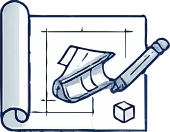
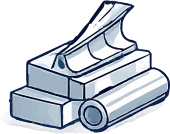
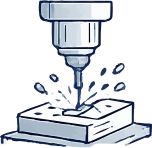
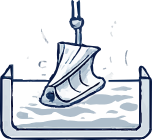
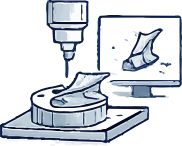

Grinding is planned together with engineering, fixtures, the following machining operations and inspection, so every critical feature is produced and verified within one coordinated flow.
Other
productions
1
1-step process
Typical components and the manufacturing routes behind them, from single-technology machining to fully integrated production.
2
2-step process
Typical components and the manufacturing routes behind them, from single-technology machining to fully integrated production.
3
3-step process
Typical components and the manufacturing routes behind them, from single-technology machining to fully integrated production.
4
4-step process
Typical components and the manufacturing routes behind them, from single-technology machining to fully integrated production.
5
5-step process
Typical components and the manufacturing routes behind them, from single-technology machining to fully integrated production.

Request a feasibility
assessment
Tell us what you need: our engineers assess feasibility and propose the most suitable manufacturing route. All information is treated confidentially.
Our commitments
What customers can count on, from the first feasibility request to serial production.
Swiss quality
ISO 9001 and EN 9100 certified processes, with complete traceability from incoming material to finished component.
One accountable partner
Engineering, machining, special processes, inspection and delivery coordinated within a single manufacturing flow.
Built for high-mix production
In-house tooling and engineering to manage many part numbers, new qualifications and urgent requirements.
Interpretation
Engineering &
Development
Technical analysis & process development
- Transforming complex requirements into clear production strategies
- Feasibility analysis and problem interpretation
- Definition of machining processes and workflows
Reverse engineering & reconstruction
- Reconstructing components from existing parts or incomplete data
- Measurement, digital modeling and redesign
- Adapting and improving legacy components
Prototyping & validation
- Testing solutions before full-scale production
- 3D simulation and process verification
- Prototype development and optimization
Transformation
Manufacturing &
Technologies
Precision
machining
- Producing high-precision components for critical applications
- Multi-axis milling (3–6 axis)
- Precision grinding and turning
Advanced technologies
- Enabling complex geometries through non-conventional processes
- EDM and wire EDM
- ECM drilling and fast drilling
Processes & treatments
- Refining components to reach final performance requirements
- Heat treatment
- Welding and brazing
- Toolmaking
Resolution
Integration &
Delivery
End-to-end
production
- Managing the entire process as a single system
- Supply chain coordination and integration
- Delivery of fully finished components
Maintenance & refurbishment
- Restoring functionality and extending component life
- Repair of worn or damaged parts
- Reconstruction of obsolete components and adaptation to existing systems
Quality control & validation
- Ensuring accuracy and reliability at every stage
- Dimensional inspection (CMM, laser scan)
- Non-destructive testing
- Material and performance analysis


